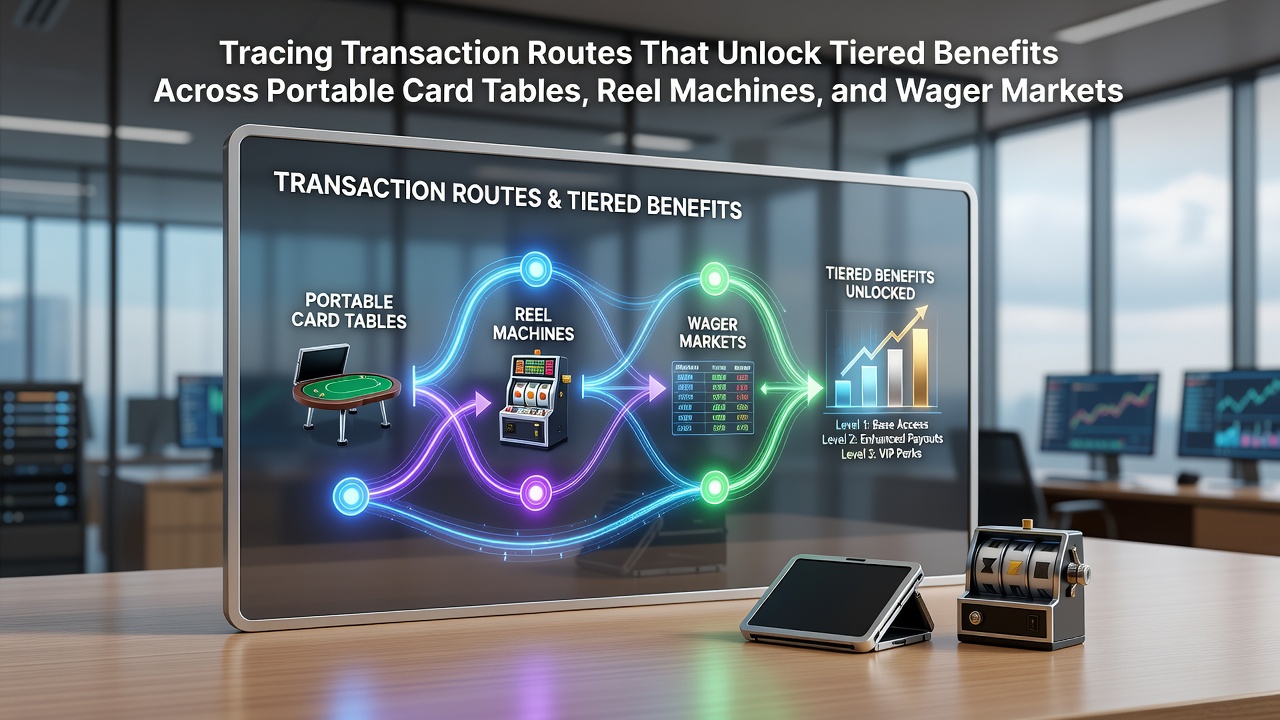
Following Transaction Trails for Tiered Benefits in Mobile Tables, Reel Slots, and Betting Markets
Transaction routes in gaming environments connect spending across portable card tables, reel machines, and wager markets to build layered rewards that players access through cumulative activity, and these pathways rely on integrated tracking systems that record every deposit, wager, and payout in real time. Operators use centralized ledgers to merge data from different game types so that activity on one platform directly influences eligibility for benefits on others, creating a unified profile that determines tier status and associated perks such as enhanced withdrawal limits or exclusive game access.
Core Mechanisms Behind Cross-Platform Tracking
Payment processors feed transaction data into loyalty engines that assign points based on wager volume and frequency, while portable card tables feed results from digital blackjack or poker sessions straight into the same database that handles reel machine spins, and wager markets contribute through settled bets on sports or events. This setup allows a single deposit to split across categories yet still accumulate toward higher tiers, and the process becomes visible when players notice their status advancing after a sequence of plays that span multiple formats. Data from the American Gaming Association shows that integrated systems now handle over 70 percent of multi-format accounts in regulated markets, which means operators can adjust benefit thresholds dynamically without separate accounts for each game type.
Security protocols encrypt each step of the route so that funds moving from a mobile wallet to a reel machine carry identifiers that link back to the original card table session, and this continuity prevents fragmentation that once forced players to manage disconnected balances. When September 2026 updates to cross-border payment standards take effect, additional verification layers will require real-time confirmation before points post to tier accounts, which should reduce discrepancies reported in earlier system audits.
Examples of Tier Unlocks Through Combined Activity
One documented case involved a player whose deposits on portable card tables triggered initial silver tier status, after which reel machine activity pushed the same account into gold benefits that included faster processing for wager market payouts, and observers note the transition happened within a single billing cycle because the ledger recognized overlapping session times. Another instance showed wager market wins converting directly into reel machine bonus credits once the player reached platinum level, illustrating how the route reverses direction depending on where the activity originates. These patterns emerge because algorithms weigh total handle rather than isolated game results, so a large sports bet can offset lower slot volume and still advance the tier.

Regulatory and Technical Considerations Across Regions
European regulators require operators to maintain auditable logs of every transaction segment so that tier benefits remain traceable to actual play rather than promotional credits alone, and similar rules appear in Canadian provincial frameworks that emphasize player fund segregation during multi-platform transfers. The European Gaming and Betting Association has published guidelines that recommend separating promotional points from cash wagers in reporting, which helps clarify how reel machine jackpots interact with card table rake contributions when calculating overall tier movement. Technical providers now embed API hooks that let operators pull real-time data from wager markets without interrupting ongoing card sessions, reducing latency that previously delayed point posting by several hours.
Wallet integrations further streamline the routes by allowing one-time verification that covers all three categories, so a player funding a portable table session can immediately route portions of the same balance to reel machines or pending wagers while the system records the split for tier purposes. This approach cuts down on redundant KYC checks and keeps the accumulated activity visible in a single dashboard.
Conclusion
Transaction routes that span portable card tables, reel machines, and wager markets now form the backbone of tiered benefit systems because they convert diverse activity into measurable progress toward higher status levels, and continued refinements in data linkage promise even tighter integration as new standards roll out. Players who maintain consistent balances across formats see their benefits compound faster than those who isolate activity to one category, which reflects the design intent behind unified ledgers rather than any preference for specific games.